Our Wild Hogge wines are produced exclusively for the Bermudian wine consumer
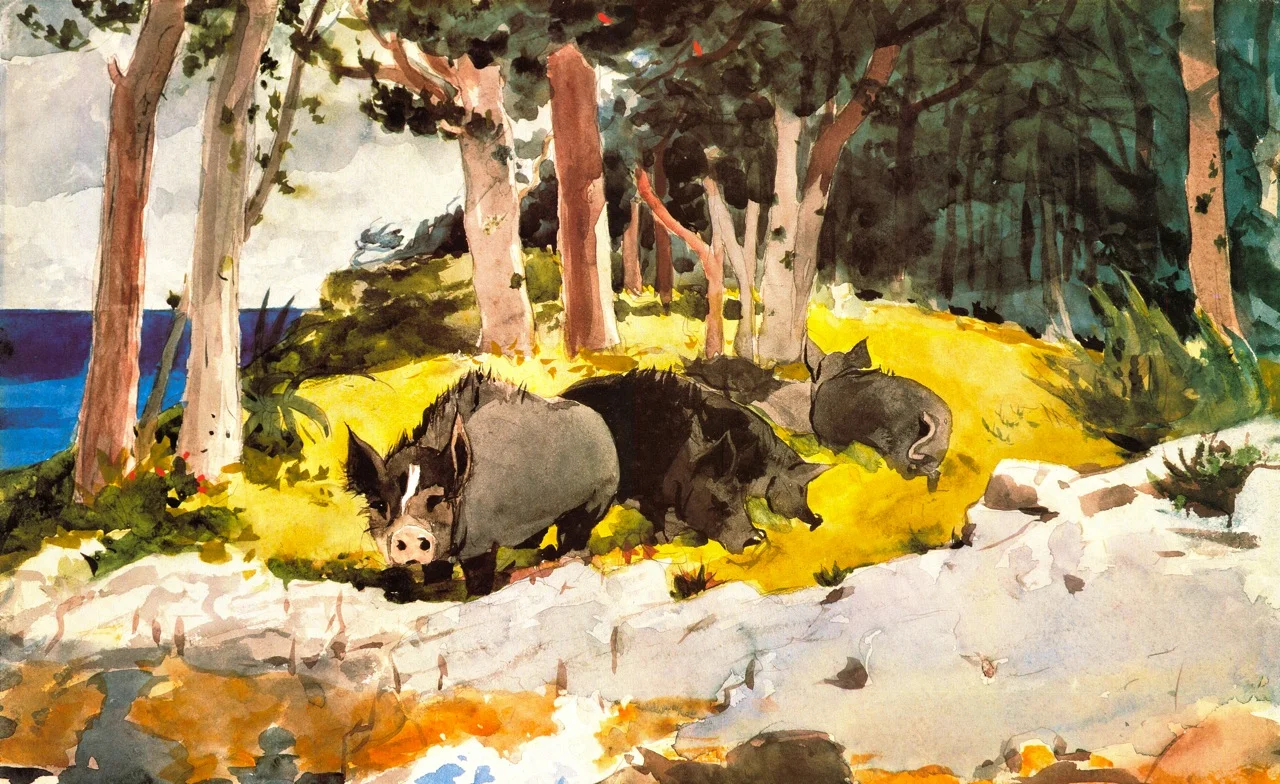
Label Artwork by Winslow Homer
"First Bermuda Settlers, 1901"
History has it that sailors would carry live pigs aboard the ships while crossing the Atlantic as a source of fresh meat. These ships would often wreck on the many reefs that surround Bermuda and the pigs would swim ashore. These Spanish Feral Hogs, similar to the domestic pig, were the first real Bermuda settlers.
Juan de Bermudez spotted the islands in 1515 when searching for his shipwrecked son. He then continued on to Florida but left some pigs there as a source of food in case he shipwrecked on his way home. These islands were named after him, now known as Bermuda.
In 1609, the 'Sea Venture' en route from England to Jamestown, Virginia, foundered off the east coast of Bermuda. The hogs provided food for the 150 survivors. Bermuda was initially known as 'Hogge Island'. The survivors built the 'Deliverance' and "Patience" from the wreckage and sailed to Jamestown, this time with salted fish and pork. When they arrived at James Fort, they found the few surviving settlers were weak with diseases and famine. These hogs helped to save Jamestown.
The hog's importance to Bermuda is exemplified by the use of a hog on Bermuda's one cent piece. Winslow Homer's painting was also used as a Bermudian stamp in 1987.
We use the old Shakespearean spelling of hog for our wines - Hogge. In 3 generations, the domestic pig reverts back to the wild boar - Thus ‘WILD HOGGE’.

Dr. T. Huw Morris was an anaesthesiologist in Bermuda for 27 years. As President of the Bermuda Wine Circle for over two decades, Huw has a reputation among wine connoisseurs for being a true wine aficionado. In his retirement, Huw enjoys pairing our wines with home cooked food for family and friends.
* Photo provided by Desmond and Luli Fountain
Paso Robles, halfway between San Francisco and Los Angeles in the Central Coast of California, is recognized as a premier wine region.
OUR MISSION
WILD HOGGE aims to produce the highest quality boutique wines for the Bermudian wine connoisseurs while also keeping the price affordable for everyone.
Come visit us
We invite Bermudians to visit our wonderful wine region on the central coast area of California. Please contact us for a private tasting of our Wild Hogge wines: Dale@wildhogge.com.